
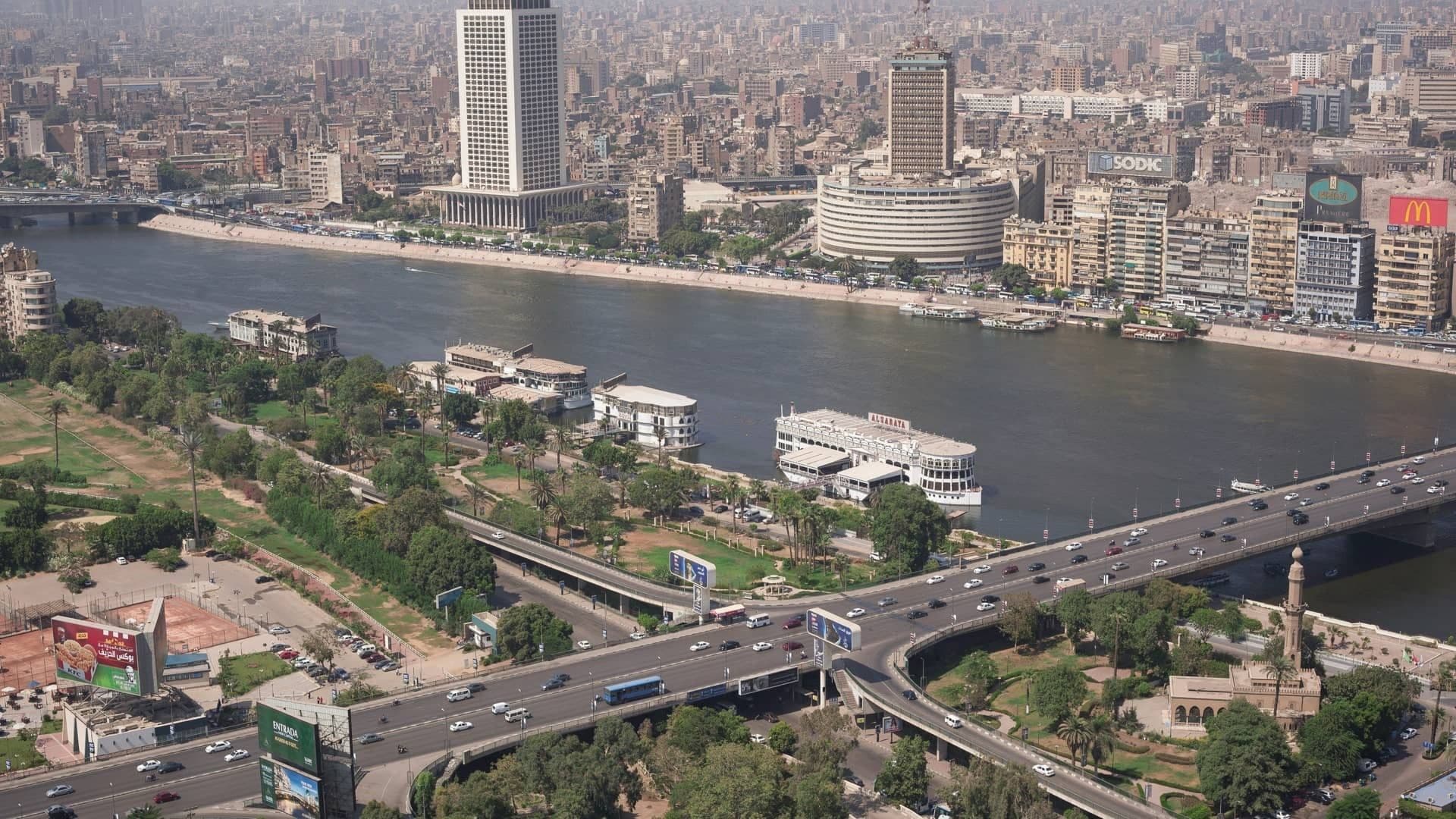
 Egito
Egito
North Africa · Egyptian Pound (EGP) · EET (GMT+2)
Simulador de folha
Estime o custo do empregador e o salario liquido
Simulacao estimada, com uma margem de ajuste aceitavel. Applies current ETA income tax brackets and NOSI contribution rates (plafond EGP 16,700/month from January 2026). Actual payroll may vary based on applicable sector and free zone status.
Ready to simplify your payroll in Egypt ?
Our team responds within 48 hours max with tailored solutions.
Contexto do pais
Egypt is Africa's third-largest economy and the Arab world's most populous country, with a GDP of $364 billion (2025). The economy is diversified across tourism, Suez Canal revenues, oil and gas, manufacturing, agriculture, and a fast-growing ICT sector. Egypt is undergoing a major economic reform programme supported by an $8 billion IMF Extended Fund Facility.
The country offers world-class infrastructure including the expanded Suez Canal, a modern highway network, and special economic zones. The New Administrative Capital, under construction east of Cairo, signals the government's commitment to modernisation. Egypt's strategic position at the crossroads of Africa, the Middle East, and Europe makes it a natural hub for regional operations.
Egypt's labour market features a large, young, and increasingly educated workforce. The country produces significant numbers of engineering, IT, and business graduates annually. Arabic is the working language, with English widely used in international business. The new Labour Law No. 14 of 2025 has modernised employment regulations, including mandatory annual raises and enhanced worker protections.
Egypt is one of Africa's most dynamic but complex payroll environments, driven by frequent regulatory updates, evolving labour laws and currency volatility. For employers, payroll in Egypt requires continuous monitoring of minimum wage increases, annual social insurance ceiling adjustments, and strict application of progressive income tax and mandatory benefits. As a result, payroll management in Egypt requires both technical accuracy and ongoing regulatory tracking.
Egypt's new Labour Law No. 14 of 2025 (effective September 2025) introduces mandatory annual raises of at least 3% of social insurance salary (minimum EGP 250/month), extended maternity leave to 4 months, and specialised labour courts. Social insurance plafonds increase 15% annually until 2027: the 2026 ceiling is EGP 16,700/month. The minimum wage has been raised six times since January 2024, reaching EGP 8,000 from July 2026. Payroll documentation must be in Arabic. Mandatory profit sharing at minimum 10% applies to all companies with 10+ employees.
Analise local
Vantagens competitivas
Africa's third-largest economy
With a GDP exceeding $330 billion, Egypt offers scale, diversification, and a massive domestic consumer market of over 106 million people.
Strategic geographic position
At the crossroads of Africa, the Middle East, and Europe, Egypt provides unmatched connectivity through the Suez Canal and major international airports in Cairo and Sharm El-Sheikh.
Large educated workforce
Egypt produces hundreds of thousands of university graduates annually in engineering, IT, medicine, and business, providing a deep talent pool at competitive salary levels.
Investment incentives and free zones
GAFI offers tax holidays, customs exemptions, and streamlined licensing in special economic zones, making Egypt attractive for manufacturing and services operations.
Modernised labour law framework
The Labour Law No. 14 of 2025 provides a clearer, more modern regulatory framework with specialised labour courts, enhanced worker protections, and standardised minimum wage mechanisms.
Riscos a monitorizar
Rapidly changing minimum wage
Six minimum wage increases since January 2024 require constant payroll system updates. The mandatory 3% annual raise on social insurance salary adds further complexity to compensation management.
Rising social insurance plafonds
The NOSI plafond increases 15% annually until 2027 (EGP 16,700/month in 2026), systematically raising employer costs year over year for employees near or above the ceiling.
Currency volatility and inflation
Despite stabilisation efforts, the Egyptian pound has experienced significant depreciation since 2022. Elevated inflation (25–30%) creates pressure on compensation packages, particularly for expatriate and senior positions.
Porque The Payroll Hub
Local expertise - International standards
Our Cairo-based office combines deep local expertise with international standards to deliver compliant, reliable payroll services.
Office in Cairo
Deep expertise in NOSI and ETA compliance
Labour Law No. 14 of 2025 implementation
Free zone and SEZ payroll management
Bilingual team (Arabic / English)
48h response time
O nosso processo de folha
Onboarding
Employee registration with NOSI, ETA tax enrollment, and Labour Office notification.
Processing
Monthly gross-to-net calculations applying progressive income tax bands, social insurance, and health insurance deductions.
Compliance
NOSI social insurance and ETA income tax filings by the 15th of the following month. Quarterly and annual reconciliation.
Payment
Salary disbursement in EGP via bank transfer, with multi-currency management for expatriate staff.
Reporting
Consolidated reports for ETA annual returns, NOSI schedules, profit-sharing calculations, and headquarters requirements.
Ready to simplify your payroll in Egypt ?
Our team responds within 48 hours max with tailored solutions.
Perguntas frequentes
Egypt's payroll complexity comes from rapidly evolving minimum wage levels (six increases since 2024), annually increasing social insurance plafonds (+15%/year until 2027), the new Labour Law No. 14 of 2025 introducing mandatory annual raises, progressive income tax up to 27.5%, combined employer/employee social contributions of nearly 30%, and Arabic-language documentation requirements.
Total employer cost is approximately 122% of gross salary. Employer contributions include social insurance (18.75% capped at EGP 16,700/month) and health insurance (3.25%). Employee deductions include social insurance (11%), health insurance (1%), and progressive income tax (0–27.5%). Mandatory 10% profit-sharing adds to annual employer costs.
With payroll outsourcing, your company remains the legal employer and Aldelia handles payroll calculations, NOSI filings, and ETA tax remittances. With Employer of Record (EOR), Aldelia becomes the legal employer in Egypt, managing all employment contracts, compliance, and liability, ideal for companies without a local entity or GAFI registration.
Outsourcing ensures compliance with the rapidly changing regulatory environment (new labour law, frequent minimum wage changes, annual plafond increases), eliminates the burden of managing NOSI and ETA relationships, reduces risk of penalties, and provides expert handling of profit-sharing calculations and Arabic-language documentation.
Aldelia's Cairo-based office manages the full payroll cycle: gross-to-net calculations with up-to-date tax brackets, NOSI social insurance and health insurance remittances, Labour Law No. 14 compliance including mandatory annual raises, profit-sharing computation, payslip generation in Arabic, and consolidated reporting.
Beyond Payroll Outsourcing
Discover Aldelia's full range of HR solutions across Africa